What is “Old Town Beaverton”?
This question comes up often and for different reasons. Here is our take on the definition of “Old Town Beaverton” for the purposes of the services we are developing.
The Beaverton Downtown Historic District was listed with the National Register of Historic Places in 1986, and encompasses a small area of 20 acres — just seven city blocks — that originally served as the city’s downtown district. (Source)
In 2011, the Beaverton Downtown Association (BDA) was founded, with the mission to “promote the public use of Beaverton’s traditional downtown area and its historical preservation while supporting its physical environment, economic vitality, and inclusive community.” (Source)
In the mid-2010’s, the City of Beaverton began creating “Restaurant Row”, an envisioned rejuvenation of the downtown historic blocks focused around the intersection of 1st Street and Watson Avenue, and that would include part of 1st Street.
The BDA’s original operating boundary noted a district reaching from Canyon Road on the north, Cedar Hills Boulevard and Stott Avenue on the west, Lombard Avenue on the east, and 5th Street on the south. This includes many of the original homes in Beaverton at its beginning. For many businesses and community members working and living in this quaint, historic neighborhood, the area became colloquially known as “Old Town Beaverton”.
Since the creation of Restaurant Row, other business segments, such as retail, service, medical, nonprofit, religious, and community engagement have vocalized the need for equitable representation. There is much more to the Old Town community than just a dining district.
In 2024, the BDA expanded its boundary further north, to encompass the Round and more of what is known as Central Beaverton. The BDA, City of Beaverton, and other civic organizations are welcome to define the scope of their mission to best suit those they serve. We wish to recognize the district as originally defined by the BDA prior to its 2024 expanded area of focus.
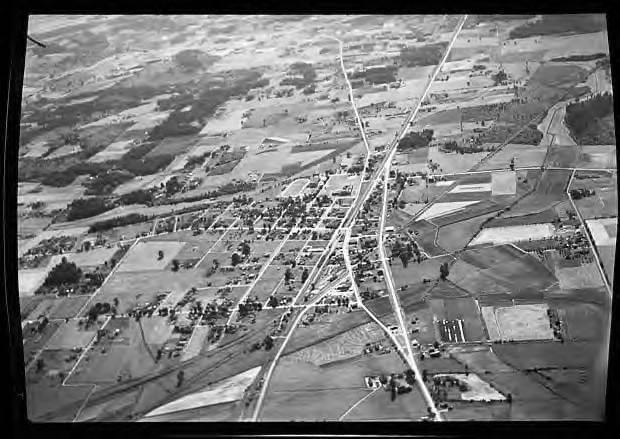
(Photo credit: Courtesy of Five Oaks Museum)
